


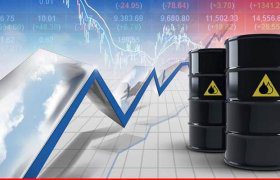
The promise of “economic openness” was deciphered. The government is set to issue parallel futures backed by crude oil.
Preliminary rumors suggest that the project will sell 220 million barrels in advance in one year; That means an average of 600,000 barrels per day. If the government succeeds in selling the entire projected volume, about 190,000 billion tomans will be financed at the current prices of the Senate currency and Iran’s heavy oil.
There is a risk of dollar and oil price fluctuations in these bonds, but the government guarantees that investors will not be harmed under any circumstances and will benefit at least to the extent of the bank deposit interest rate ceiling. Parallel futures also allow buyers to sell it on the secondary market if needed. In the current situation, even if the government manages to finance half of the projected amount from this place, it can remove the shadow of the budget deficit from monetary variables.
Preliminary rumors suggest that the government intends to sell 220 million barrels of oil in advance. That is, foreign exchange earnings that are not currently achievable, sell inside and hit 2 targets with this arrow; Cover both the budget deficit to some extent and take action to manage liquidity. Preliminary agreements indicate that the bonds will be priced based on the Iranian oil sales rate and the dollar rate in the Senate system; Of course, applicants must pay Rials for the purchase. But given that the two-year bond requirement requires government access to the global oil market, it could also have a political message.
*** Basic details
Official details of the government’s economic opening promise have not yet been released. However, follow-ups indicate that 220 million barrels of oil are to be sold in advance. 220 million barrels of oil, if divided into days of a year, means sales of 600,000 barrels per day. In the initial assumptions of Budget 99, the government based itself on selling one million barrels of oil a day at $ 50, or $ 18.2 billion a year. However, the head of the Program and Budget Organization announced on Friday that 6% of oil revenues had been realized. If the government was to raise $ 18.2 billion in one year, it would have to raise about $ 7 billion in the first 141 days of the year.
But according to Mohammad Baqer Nobakht, 6% of this volume has been achieved; That’s $ 420 million. Of course, this does not mean that oil sales have dropped to 60,000 barrels per day, as oil prices also fell sharply during the corona, and Iran’s heavy oil sales fell as low as $ 20. . In fact, the declining force of oil revenues has not only been the decline in sales volume, but also foreign exchange earnings have been under pressure from the price side.
Of course, at present, the oil market is somewhat revived and the price of Iranian oil is in the range of $ 44. But if we assume that the average price of oil during the first five months of this year is $ 30, then the government has sold almost 100,000 barrels per day. So, 6 times the actual sales figure is supposed to be sold on the stock exchange so that the government can compensate for part of the oil backlog during the sanctions and the corona.
*** Characteristics of papers
It was announced yesterday that the new government bonds will be priced at the exchange rate of the Senate system and the type of bonds will be parallel. Bonds are a financial instrument for financing government and non-government enterprises. This document shows the pre-sale contract between the publisher and the buyers. When the adjective “parallel” is placed next to the futures, it indicates that the bonds will be able to be traded. This means that the government has considered a secondary market for new securities. In these bonds, the NPC must be committed to delivering the oil to the bondholder within the next 2 years, or the bondholder must give the power of attorney to the NPC to sell the pre-purchased oil. The pre-sale of 2 million barrels is also to be done in a one-year period.
If we assume that the government sets the price of bonds at the current prices of dollars and oil, high figures are obtained. The price of Iranian heavy oil is currently in the range of $ 44, and the exchange rate in the Senate system is 22,000 Tomans. If financing is based on these numbers, it can earn 193 thousand billion tomans for the government over the next year.
This number is almost equal to the volume of government debt securities, of which 50,000 billion tomans have been published so far, and the rest will be offered later in the year. On the other hand, collecting 193 thousand billion tomans from the market and injecting it into the oil industry to develop infrastructure and also provide the country’s development budget, can also reduce the inflammation in the asset markets. Of course, these mathematical calculations are on paper, and the issue of oil papers is probably more complicated than that.
*** The message of political economy
The sale of oil to the people, at a volume that is almost 6 times the current figure, will mean that the government sees the prospect that the situation with foreign exchange earnings will change over the next two years. The government will commit to the people that an opening is imminent. However, this opening in foreign exchange earnings must either go through negotiations or increase Iran’s oil sales capacity to countries such as China. Otherwise, accepting current prices can be difficult for buyers. Some critics, especially in the Islamic Consultative Assembly, argue that the plan is merely an imposition of cost and commitment on the next government.
If the government’s oil sales remain in the current situation, providing the necessary resources to recover the bonds at maturity will require large-scale financing; Almost at the time of maturity, the sales rate is Oil is calculated in dollars on the Senate system at the time. But if the country’s oil revenues are to return to normal, supplying 600,000 barrels per day on time should not be a difficult task.
In 96, before the new round of sanctions, Iran exported an average of 2.3 million barrels of oil per day, so it would have to give up about a quarter of it to meet its oil futures commitments. In fact, the government has tried to transfer its future income to today in order to get the country through the current difficult situation. Of course, the new plan will not be implemented without the consent of the Supreme Leader.
*** Harmless securities
Harmless bonds: The government has tried to use all the elements of attractiveness in designing new bonds. Most importantly, these bonds are harmless; This means that buyers will not incur any losses if the price of oil or the dollar falls. It is rumored that the government intends to set the interest rate on parallel futures as high as the interest rate on long-term bank deposits. As a result, if a barrel of oil is currently priced at 800,000 Tomans and in 2 years later, its value reaches 600,000 Tomans, buyers will probably not accept this loss of 200,000 Tomans and will even benefit from the bank interest rate.
As a result, it is a reasonable option for people who want to keep their money in the money market for 2 years. Because in this case, in addition to the interest rate on deposits, they can also benefit from the increase in the price of the dollar or oil. Of course, what changes in the price of securities in the secondary market will depend on the market. Holders of securities can sell the securities in the secondary market whenever they need liquidity, even if it is not bought, because it is considered a marketing for the market.
این مطلب بدون برچسب می باشد.








ثبت دیدگاه