


The International Monetary Fund ( IMF ) is one of the most authoritative sources for announcing economic reports at the international level, which analyzes the situation of the world’s financial and economic markets according to the program every year this month. The report examines China in detail, as it is the only country that has experienced positive economic growth this year and has been able to sustain its economic growth despite the coronavirus epidemic. In this memo, we will examine the various dimensions of this report. Please be with Artan Press.
*** Global Macroeconomic Assessment
The global economy is emerging from an anomalous situation in which, in April of this year, the worst reports on the state of the global economy in the last decade were analyzed. Due to the continuing outbreak of COVID-19, many countries have had slow reopening of businesses, and some have reintroduced partial and temporary restrictions to protect vulnerable populations, locking in economic conditions. And the decline in economic prosperity and, consequently, the heavy shadow of the recession on the markets. Although China, the birthplace of the world’s corona, has been recovering faster than the rest of the world, the world’s economic growth has not improved so quickly and continues to face challenges.
*** Global economic growth from forecast to reality
The global economy was projected to grow by about 5 percent in 2020, 1.9 percent lower than the actual global economic outlook forecast for April 2020, as predicted by the World Bank and the International Monetary Fund. The COVID-19 pandemic has had a very large negative impact on the performance of the global economy and has affected all economic activities around the world. All the activity that took place in the first half of 2020 was somehow overshadowed by the rules and stone-throwing of the Corona.
*** The process of slowing the recovery of the global economy
The gradual improvement of the economy is expected to be a little slower than the previous forecast, and practically the recession of a few years will overshadow all the international markets and the real demand will decrease significantly due to the global economic crises. In 2021, global growth is projected at 5.4%. Overall, this means that GDP by 2021 is about six and a half percent lower than forecast in January 2020.
*** Predict the recession in the commodity market
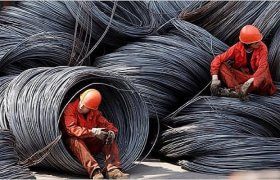
The downturn in commodity markets will severely affect global steel and commodity prices. The negative picture of the global outlook for the economy, especially for low-income households, must be pursued very seriously next year, and if there is no global cooperation, the crisis will escalate, and this could affect all global markets. And strengthen the global recession for a decade.
*** Evaluate the manufacturing sector in the IMF report
Economic momentum in the manufacturing sector has weakened significantly, as the global supply chain trend in the commodity sector has been severely disrupted, with virtually the world’s major ports going through periods of closure since 2020, which The issue has brought many challenges for the production sector and its consequences can be seen until today, ten months after this year. The state of recession and economic decline in the manufacturing sector has reached the same level as the decline of economic indicators during the global financial crisis of 2008.
Increased international trade has increased investment risks due to declining domestic production and geopolitical tensions and uncertainty about the future of the global trade system, and international cooperation in general, undermining global trade confidence. Imported investment and global trade decisions.
*** Evaluate the services sector in the IMF report
The situation of the service sector is a little better than the situation of the production and goods sectors. Service companies tried to maintain communication with customers by diversifying the amount of services and providing software modules. This issue caused the economic indicators of the service sector to experience an average of 4 percent growth compared to last year in the global economy, which shows the attractiveness of the service sector in future markets.
*** Evaluate China’s economic growth
Before the start of economic reform and the liberalization of world trade, almost 40 years ago, China launched policies that kept the economy very weak, stagnant, under central control, very inefficient, and relatively separate from the world economy. Since the opening of foreign trade and investment and the implementation of free market reforms in 1979, China has been among the fastest growing economies with an average annual GDP growth of 9.5% until 2018. It was so popular that the World Bank described it as “the fastest sustainable development by a large economy in history.”
Such growth has allowed China to double its GDP on average every eight years, lifting nearly 800 million people out of poverty.
*** Chinese record in economic growth
China has become the world’s largest economy (based on purchasing power parity), producer, trader and holder of foreign exchange reserves. This in turn has made China a major US trading partner. China is the largest trading partner of US goods, the largest source of imports and the third largest export market for US products. China is also the largest holder of US Treasury securities to finance federal debt and keep US interest rates low United helps.
*** Decline in China’s gross domestic product
As China’s economy matures, its real GDP growth has slowed significantly, from 14.2 percent in 2007 to 6.6 percent in 2020, and is projected to grow by the International Monetary Fund. Money) to decrease to 5.5 percent in 2024.
*** Innovation is the secret of Chinese economic growth
The Chinese government has made innovation a top priority in its economic planning through a number of high-profile projects such as “Made in China 2025”, a plan announced in 2015 to upgrade and modernize Chinese production in 10 key sectors through extensive government assistance. Has been. In order to make China a major global player in these sectors, this strategy has been designed and its strict implementation has been closely monitored. However, there is growing concern that China intends to use industrial policies to reduce its reliance on foreign technology and ultimately dominate global markets. An issue that Chinese analysts have always avoided elaborating on
*** The economic consequences of the US-China trade war
In 2017, Trump practically launched his trade war against the Chinese economy. He subsequently increased tariffs on $ 250 billion worth of imports from China by 25 percent, followed by China raising tariffs on $ 110 billion worth of imports from the United States (from 5 percent to 25 percent). Such measures drastically reduced bilateral trade in 2019.
On May 10, 2019, Trump announced that he was considering raising tariffs on almost all of China’s remaining products. Prolonged and intensified trade conflict between the United States and China could have negative consequences for the Chinese economy.
*** Implications for China’s economic growth for Americans
China’s growing global economic influence and the economic and trade policies it maintains have significant implications for the United States and are therefore being considered by Congress. While China is a large and growing market for American companies, its incomplete transition to a free market economy has led to economic policies that are detrimental to US economic interests, such as industrial policies and the theft of US intellectual property. This report provides the context for China’s economic growth, which describes its current economic structure.
*** IMF recommendations to countries
The International Monetary Fund emphasizes that it is true that the costs of closure and restrictions will be very heavy for governments in the current situation, but it will lead to an upward trend in economies and a boom in industry, which will be offset in the medium term. Therefore, the proposal and recommendation of the fund is to continue the process of social distance and reduce the number of employees involved in industries and increase work shifts in factories and offices. This issue has been widely implemented in China and the United States and positive results have been achieved, which I hope will be implemented by Iranian stakeholders as well.
*** Iran’s economic indicators in the IMF report
Iran’s economic outlook for 2020 is slightly more optimistic from the International Monetary Fund’s point of view than the previous year. In this report, the inflation rate this year is estimated at about 30 percent, which has decreased by about ten percent compared to last year’s report. On the other hand, due to the existence of new ways to sell Iran’s oil and minerals, it has better foreign exchange earnings than last year and has been able to improve its economic growth by three percent.
این مطلب بدون برچسب می باشد.









ثبت دیدگاه